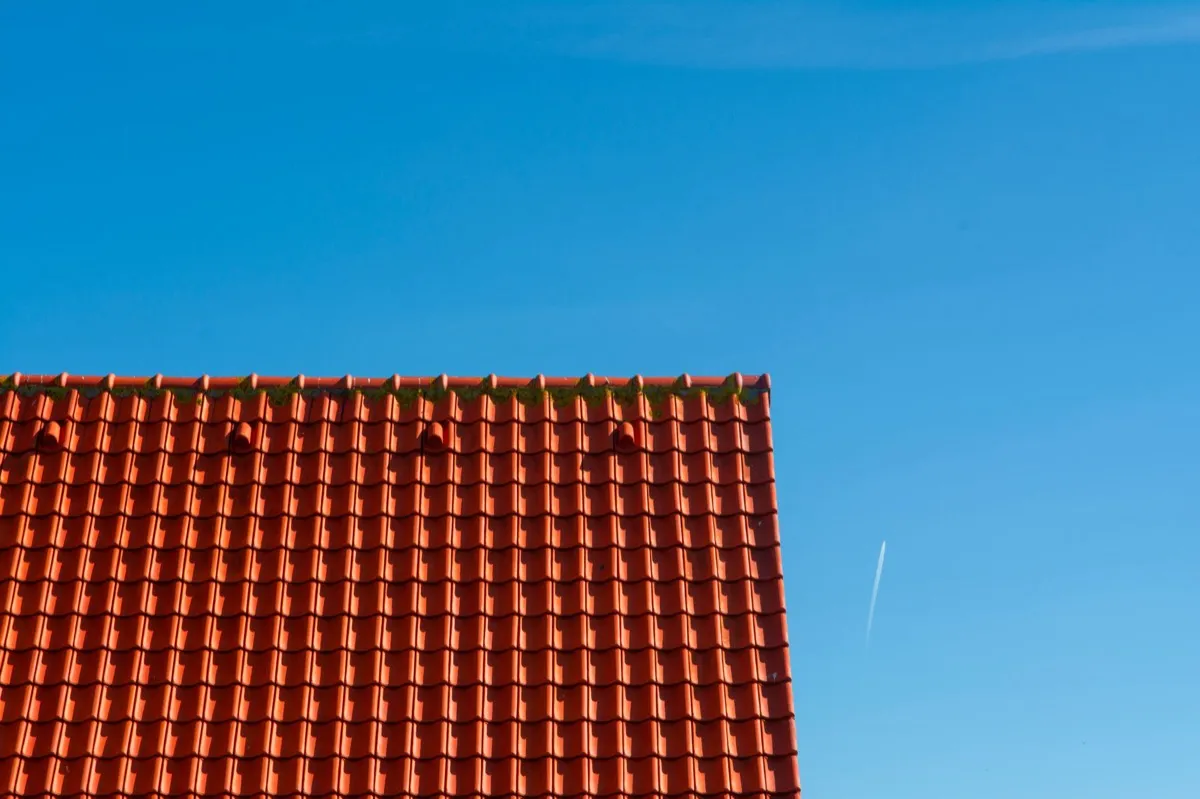
In Florida a roof usually stops being insurable before it stops being a roof. Those are two clocks, and the second one schedules your spending.
The national service life figures are a starting point, not an answer; the rated-versus-real numbers by material live in our piece on how long a roof lasts. This post is what Florida does to them: the climate subtracts, and the rules decide when the subtraction stops being your call.
The 25-year rule is not a law
Ask this question online and you will be told Florida requires roof replacement at 25 years. No such statute exists. Nothing in Florida law orders a homeowner to replace a working roof at any age, and no page making the claim ever hands you a section number.
The 25 is real, but it is an eligibility rule. Citizens Property Insurance Corporation, the state-created insurer of last resort, requires documentation of full roof replacement for "Homes with shingle or other types of roofs more than 25 years old", and for "Homes with tile, slate, clay, concrete or metal roofs more than 50 years old". A rule effective August 1, 2024 added a one-time exception where documentation establishes remaining useful life.
So the number is right and the rest of the folk version is wrong: it belongs to one insurer, gives hard coverings twice as long, and has an exception.
What the statute actually says
The real rule is s. 627.7011(5), Florida Statutes. Two sentences do the work.
(b) An insurer may not refuse to issue or refuse to renew a homeowner's policy insuring a residential structure with a roof that is less than 15 years old solely because of the age of the roof.
(c) For a roof that is at least 15 years old, an insurer must allow a homeowner to have a roof inspection performed by an authorized inspector at the homeowner's expense before requiring the replacement of the roof of a residential structure as a condition of issuing or renewing a homeowner's insurance policy. The insurer may not refuse to issue or refuse to renew a homeowner's insurance policy solely because of roof age if an inspection of the roof of the residential structure performed by an authorized inspector indicates that the roof has 5 years or more of useful life remaining.
Read what that gives and what it does not. Under 15 years, age by itself cannot cost you the policy. At 15 and over you get a right to buy an inspection — "at the homeowner's expense" is in the text, so it is your bill — and a report showing five years or more of useful life beats an age-only decision.
Two words carry the weight. The first is solely. Subsection (6)(c) expressly preserves an insurer's ability to decline "on the grounds that the structure does not meet underwriting criteria ... or for other lawful reasons". Age is the protected ground; condition never was. A carrier that sends its own inspector and writes up cupping, exposed mat or a soft deck is not relying on age at all.
The second is requiring: the statute governs what an insurer may require as a condition of coverage, and nowhere orders a homeowner to replace anything.
Subsection (5)(d) dates a roof from "the last date on which 100 percent of the roof's surface area was built or replaced". Half a roof redone six years ago is not a six-year-old roof.
All of it applies to policies issued or renewed on or after July 1, 2022, and arrived through the two 2022 special-session property bills, chapters 2022-268 and 2022-271. Anything describing the pre-2022 position as current is four years stale.
Since 2024, a roofer can sign that inspection
Subsection (5)(a) lists who counts as an "authorized inspector": home inspectors, building code inspectors, contractors, engineers, architects, and anyone else the insurer recognizes. As enacted in 2022, subparagraph 3 read "A general, building, or residential contractor licensed under s. 489.111" — the trade that spends every day on roofs was not on the list. Chapter 2024-182, Laws of Florida, amended it to read "A general, building, or residential contractor licensed under s. 489.111 or a roofing contractor".
Do not over-read it: the paragraph defines an authorized inspector as one "who is approved by the insurer", so the carrier decides whose signature it accepts. Citizens is blunt about it: whatever the inspector reports, it "reserves the right to render a final decision on the overall insurability of the roof".
What the climate takes off the number
The physics are not Florida-specific; the dose is. Heat ages asphalt, and Florida supplies it most of the year.
The Florida Solar Energy Center measured this rather than estimating it. In test prototypes reported by Chandra and Moalla (FSEC-PF-231-91), dark shingles reached 170°F under peak sun, while a clay tile roof came out ahead, its deck temperature "never more than 8°F warmer than ambient". That is the honest reason tile behaves like a different product here: the ventilated gap under it, not the tile itself.
Stack the rest on top. Salt-laden coastal air attacks fasteners and cut metal edges rather than the covering, and warmth plus humidity feeds the algae that streaks southern roofs. Hurricanes are an event driver, not a wear driver: they do not shorten a roof, they end it, often one with a decade of rated life left. Plan on the bottom of every published range for asphalt.
The code makes a Florida roof a different assembly
Two statutes decide what you may build back. Section 553.844(3) requires that on site-built single-family homes "a roof replacement must incorporate" a secondary water barrier and improved roof-decking attachment, and in the wind-borne debris region, above an insured value the statute fixes, roof-to-wall connections as well. That is why a Florida re-roof includes work you will never see again.
Then there is the other 25, the one the folk rule got tangled with. Section 553.844(5):
if an existing roofing system or roof section was built, repaired, or replaced in compliance with the requirements of the 2007 Florida Building Code, or any subsequent editions of the Florida Building Code, and 25 percent or more of such roofing system or roof section is being repaired, replaced, or recovered, only the repaired, replaced, or recovered portion is required to be constructed in accordance with the Florida Building Code in effect, as applicable.
Read the condition, because it is the whole rule. The exception exists only where the roof already complied with the 2007 code or later. On an older roof, crossing 25 percent of a section pulls that whole section up to current code, which is how a storm repair becomes a re-roof. The vintage of your last roof, not its age, decides which side of the line you sit on, and local governments may not modify the exception.
Miami-Dade and Broward are a separate regime
A Florida roof is not one thing. The High-Velocity Hurricane Zone covers Miami-Dade and Broward, and runs its own code chapters, test protocols and paperwork.
The Florida Building Code 8th Edition (2023), Section 1525, sets a Uniform Roofing Permit Application that lists every assembly component against a Product Approval number, states design wind pressures separately for Zones 1', 1, 2 and 3, and requires calculations to RAS 127 or 128. A covering that is legal in Ocala may have no approval that reaches Hialeah.
Section 1524 is the part homeowners should read: it obliges the roofing contractor to explain seven items and have the owner initial each, and two bear directly on roof life. Item 2: "the existing wood roof deck may have to be renailed in accordance with the current provisions of Chapter 16 ... (The roof deck is usually concealed prior to removing the existing roof system)." Item 5, on ponding: "Ponding may shorten the life expectancy and performance of the new roofing system."
That is a code-mandated admission that nobody, your roofer included, knows what is under there until the tear-off. Believe it.
How long does a roof last in Texas?
Texas is the useful contrast, because the constraint differs in kind. Florida roofs are limited by insurability; Texas roofs by a single afternoon.
Count it from NOAA's Storm Prediction Center database and the gap is not close. In 2022, 2023 and 2024, Texas logged 72, 105 and 81 separate days with severe hail of an inch or more somewhere in the state. Florida logged 32, 31 and 15. Hail ends Texas roofs while the covering still has years of rated service in it, so the planning question there is not what the wrapper says but how often your own street has been hit.
The rules invert too. Texas issues no state roofing license, so there is no state number to check a contractor against. But the coast has a gate Florida has no equivalent of. In the 14 first-tier coastal counties and the part of Harris County east of Highway 146, the Texas Department of Insurance states that "Most new construction, roof replacements, major repairs, and other alterations require an inspection and certificate of compliance" — the WPI-8. The Texas Windstorm Insurance Association puts the consequence plainly: without one, a structure "may be considered uninsurable and ineligible for coverage with TWIA".
Who counts as a roofer in Texas
An inspection right is worth what the credential behind it is worth, and states differ enormously on whether there is a credential at all.
Texas issues no roofing license of any kind, so a state number is not something any roofer here can show you. A contractor also may not act as a public adjuster on a property it may work on, even holding an adjuster license.
The paperwork clock in Texas
A roof that ages out of a policy gets replaced in a hurry, and hurry is where contracts get signed. What your state gives you afterwards ranges from a few days to nothing at all.
Texas gives you no right to cancel after a claim is denied, and that is worth saying plainly because so much roofing copy implies otherwise. What Texas does require is a specific notice in twelve-point boldface on any contract over a thousand dollars expected to be paid from insurance proceeds. Read that paragraph before you sign it.
Bottom line
Plan around the insurance calendar rather than the shingle warranty. Under 15 years, age alone cannot cost you a policy. At 15 and over, an inspection showing five years of useful life is the document that keeps it, and since 2024 a roofing contractor can write it if your carrier approves the inspector. The 25-year figure is Citizens' rule, not a statute. The 25 percent rule is code, not age.
Waco Premium Roofing does written roof inspections with photographs, storm damage work and full roof replacement across Waco and Central Texas. Call (866) 786-9345 if you need a remaining-life report your insurer will actually read.
Ready for a free quote in Waco?
Waco Premium Roofing — free estimate, clear scope, no pressure. Use the form on this page or jump to the homepage quote.
Related services in Waco
Waco Premium Roofing money pages — go straight to the service you need.
- Roof Replacement →
Most full replacements in Waco are settled, not purchased. The carrier writes a scope, pays actual cash value first, and holds back depreciation until the work is finished.
- Storm Damage Roof Restoration →
Storm work in Central Texas is a process with a clock on it, not a single job. There is a date of loss, a mitigation phase, a scope, almost always a supplement, and finally a completion invoice that releases your depreciation.
- Roof Inspections →
An inspection should be able to end with the words do not file. Most storm-chasing inspections in this market cannot, because the visit exists to open a claim.
- Roof Leak Repair →
Here is the sentence most Waco roofers will not say out loud: your leak is probably not a claim. Wear and tear, deterioration and failed sealant are excluded on nearly every homeowners policy in Texas, and filing anyway usually buys you a denial.
- Hail Damage Roof Repair →
The question that decides a hail claim is whether damage is functional or cosmetic. Functional means the shingle can no longer keep water out for its remaining service life.
Frequently asked questions
How long does a roof last in Florida?
Physically, asphalt in Florida lands at the bottom of every published range, because heat is what ages asphalt and Florida supplies it eleven months a year. The Florida Solar Energy Center measured dark shingles at 170 degrees F under peak sun in a Florida test prototype.
Tile behaves differently for a measurable reason rather than a marketing one: in the same study the deck under clay tile never ran more than 8 degrees F above ambient air. But the practical answer is usually shorter than the physical one, because in Florida a roof stops being insurable before it stops being a roof.
Does Florida law require you to replace your roof at 25 years?
No. There is no Florida statute that orders a homeowner to replace a working roof at any age, and no page claiming otherwise will give you a section number. The 25 is real but it is an underwriting rule, not a law.
Citizens Property Insurance Corporation, the state-created insurer, requires documentation of full roof replacement for homes with shingle or other roofs more than 25 years old, and more than 50 years old for tile, slate, clay, concrete or metal. Since August 1, 2024, Citizens allows a one-time exception where documentation establishes remaining useful life.
Can my insurer refuse to renew my policy because my roof is old?
Not on age alone, within limits set by s. 627.7011(5), Florida Statutes. The statute says an insurer may not refuse to issue or renew a policy insuring a structure with a roof less than 15 years old solely because of the age of the roof.
At 15 years and over, the insurer must allow you to have an inspection done by an authorized inspector at your own expense, and may not refuse solely because of roof age if that inspection indicates 5 years or more of useful life remaining. Note the word solely.
Subsection (6)(c) expressly preserves the insurer's ability to decline for underwriting criteria or other lawful reasons, so condition was never protected. Only age was.
What is Florida's 25 percent roof rule?
It is a building code rule about how much of a roof you touch, and it has nothing to do with age.
Section 553.844(5), Florida Statutes, says that if an existing roofing system or roof section was built, repaired or replaced in compliance with the 2007 Florida Building Code or any subsequent edition, and 25 percent or more of it is being repaired, replaced or recovered, only the repaired, replaced or recovered portion has to meet the current code.
The practical effect is that the vintage of your last roof decides whether a large storm repair stays a repair. The statute also bars local governments from adopting ordinances that modify that exception.
How long does a roof last in Texas?
In Texas the limiting factor is usually a single afternoon rather than a slow decline. Counted from NOAA's Storm Prediction Center severe weather database, Texas had 72, 105 and 81 separate days of severe hail an inch or larger in 2022, 2023 and 2024; Florida had 32, 31 and 15.
Hail ends roofs there while the material still has years of service in it, which is why impact-rated coverings and the hail claim history of your own street matter more than the number on the shingle wrapper. The regulatory picture is the mirror image of Florida's too.
Texas issues no state roofing license at all, so there is no state number to verify a contractor against.
On the coast, the Texas Department of Insurance says most new construction, roof replacements, major repairs and other alterations in the 14 first-tier coastal counties and part of Harris County require an inspection and certificate of compliance, the WPI-8, before a property is eligible for Texas Windstorm Insurance Association coverage.
Who is allowed to certify that my Florida roof has five years left?
Section 627.7011(5)(a) defines an authorized inspector, and the list matters because it changed. As enacted in 2022 it covered a licensed home inspector, a certified building code inspector, a general, building or residential contractor, a professional engineer, a professional architect, or anyone else the insurer recognizes as qualified. Roofing contractors were not named.
Chapter 2024-182, Laws of Florida, amended the paragraph so it now reads a general, building, or residential contractor licensed under s. 489.111 or a roofing contractor. Read the opening line as well: the definition begins an inspector who is approved by the insurer, so the carrier still holds the gate.
Local context
How this applies in Waco, TX
Every article here is written from roofing work done in Waco and Central Texas, so the numbers reflect local labour, permit and material costs rather than a national average. Your own job can land either side of them depending on access, the condition of what is already there, and the materials you pick — architectural laminate shingles, synthetic underlayment, ice-and-water shield at valleys.
The way to turn any of this into a real answer is to have someone look at your actual situation. The free estimate is free, itemized and written down, with no deposit and no obligation. Call (866) 786-9345 or start on the Waco Premium Roofing homepage.
Areas Waco Premium Roofing covers
Waco first, then the surrounding communities of Central Texas. Each has its own page with local detail rather than a copy of this one:
- Hewitt, TX — McLennan County, population 16,026
- Robinson, TX — McLennan County, population 12,443
- Bellmead, TX — McLennan County, population 10,494
- Woodway, TX — McLennan County, population 9,383
- Lacy-Lakeview, TX — McLennan County, population 6,988
- McGregor, TX — McLennan County, population 5,321
Or jump to the full list of Waco services.
More from the Waco Premium Roofing blog
- How Long Does a Metal Roof Last in Waco? The Coating Decides
A metal roof's life is set by its coating and fasteners, not the metal. Plus real service life for slate, rubber, TPO and composite roofs in Waco, TX.
- Hail Damage to a Roof and Insurance in Waco: What the Policy Already Decided
Hail is the peril carriers rewrote the policy around. Cosmetic exclusions, roof settlement schedules and percentage wind-hail deductibles decide a Waco, TX claim before anyone climbs the ladder.
- Hail Damage on a Roof in Waco: What Is Real and What Only Looks Like It
Hail damage to a shingle is a fracture in the mat. Granule loss, blisters and round dark marks are different problems.
The Waco Premium Roofing Team
roofing specialists serving Waco, TX
Written by the Waco Premium Roofing team — insured roofing pros serving Waco, TX and the surrounding area.